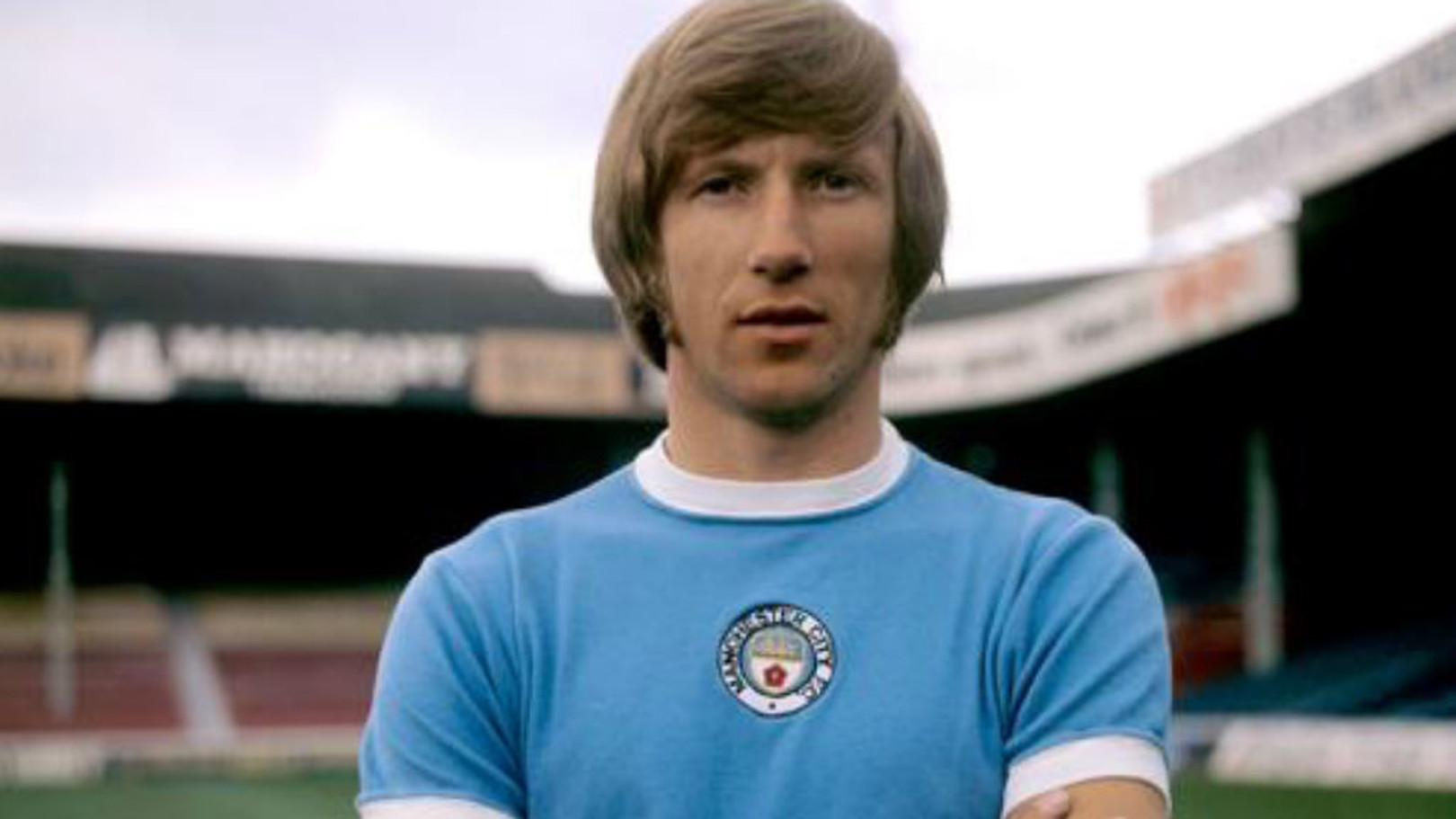
The story has entered folklore about the day when a fan – Dave Brammer – ran on to the Maine Road pitch with a crown he had specially made for the occasion. He placed it on Colin’s head just before kick-off.
For years I’ve known of this day and remember being sat in the Platt Lane Stand when it happened. I was only eight back then but remember it as a hugely significant day.
For those who may not quite recognise the significance, our hero Colin Bell had suffered a devastating leg injury in the November 1975 Manchester Derby and this was his return to first team action, causing Dave Brammer to choose that day to ‘crown’ his hero. Like many City fans I remembered the moment but couldn’t quite remember the specific game when the ‘coronation’ happened.
Over the years the details of the crowning have become muddled with some articles suggesting the event actually happened in 1978, two years later.
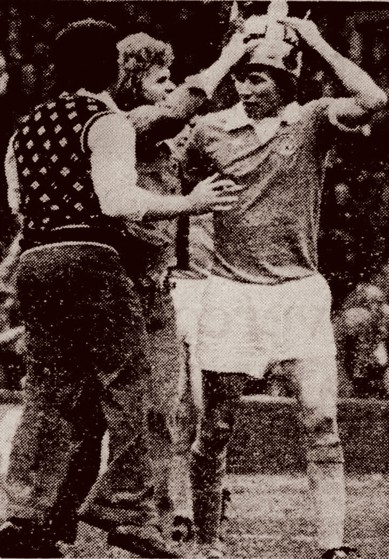
However, I was recently trawling through scrapbooks and old newspaper articles and found this image of the moment it happened. Colin’s return game was against Derby County on 10 April 1976, and this image was captured by an unnamed photographer.
There had been rumours of Colin returning for months and manager Tony Book had hoped he’d be fit for the 1976 League Cup final. Sadly, there were several near-miss moments which all added to the desire of fans to see our King return.
Due to a bit of an injury crisis Colin returned for the League game with Derby and played in the unfamiliar position of right back. In his first move of the match King Colin performed a firm tackle on Leighton James, leading to a huge Maine Road cheer. We were all so desperate for our hero to show signs that he was fully recovered, and this reassured us to some extent.
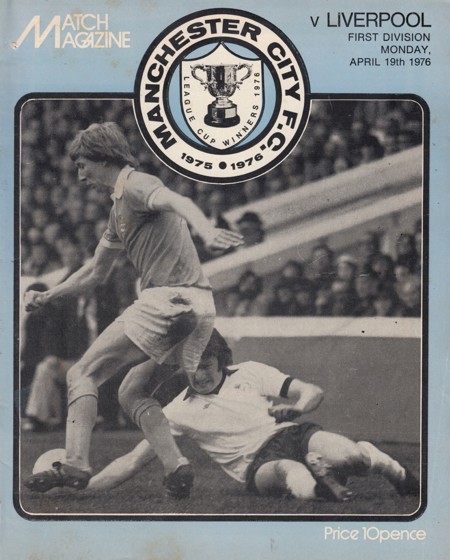
The game was a thrill-a-minute fixture with City racing to a 3-0 lead by the 18th minute. However the sending off of Mike Doyle gave Derby a chance to come back, and the match ended 4-3 to City. We were all relieved at full time. Not only had City won but Bell had survived the full 90 minutes too.
Colin’s return not only excited the Manchester public it excited England fans too. England boss Don Revie named Bell, alongside Doyle, Tueart and Royle in his squad for May’s internationals. The announcement came only three days after the Derby game. Again, just like Colin’s 1976 City return, his England selection is often overlooked.
Sadly, a calf injury prevented Colin from playing for City at Newcastle in the following match, but he did play against Leeds, Liverpool and Arsenal, even scoring at Elland Road. Overall, the return to action had been somewhat premature however and Colin’s injury continued to plague him.
The opportunity to play for England passed by and Colin missed the entire following season for both club and country. He made his next return against Newcastle on Boxing Day 1977 in a truly emotional day that has entered City folklore. It remains etched in the minds of all of us present that day, but we should also remember this day in 1976 too for similar reasons.
One point worth noting about Colin’s April 1976 return is that it had captured the imagination in a remarkable way. The Blues had nothing really to play for as they’d already qualified for the UEFA Cup via the 1976 League Cup success and had no chance of winning the League.
The attendance was 50,439 and this was seen as significant. It was around 10,000 higher than the previous home game; 12,000 higher than the previous season’s meeting with Derby and about 16,000 more than our average attendance. The crowd was around 5,000 more than for Colin’s more famous return against Newcastle in 1977 too.
In 1976 fans had heard that Colin was edging closer to a return and the news that he would play against Derby came earlier in the week. It created one of those ‘must see’ moments in City’s history. So much so that Dave Brammer chose that day to crown our Kippax King.
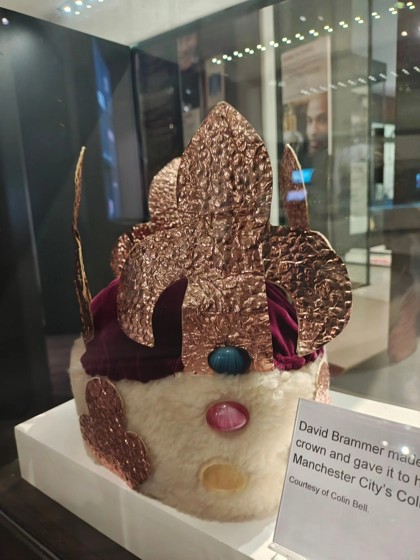
The crown Brammer presented can be clearly seen in this rediscovered photo capturing the moment. Colin treasured the crown throughout the decades that followed and I remember him proudly showing it to me when I visited his home in the mid-2000s.
He claimed that because it came from the fans it meant so much more than certain other accolades sent his way. Today, the crown is on display at the National Football Museum.
Gary James is a football historian whose recent works include ‘Manchester Corinthians: The Authorised History’ and ‘Peter Barnes: The Authorised Biography’. More from Gary at https://gjfootballarchive.com/.